1. Executive Summary
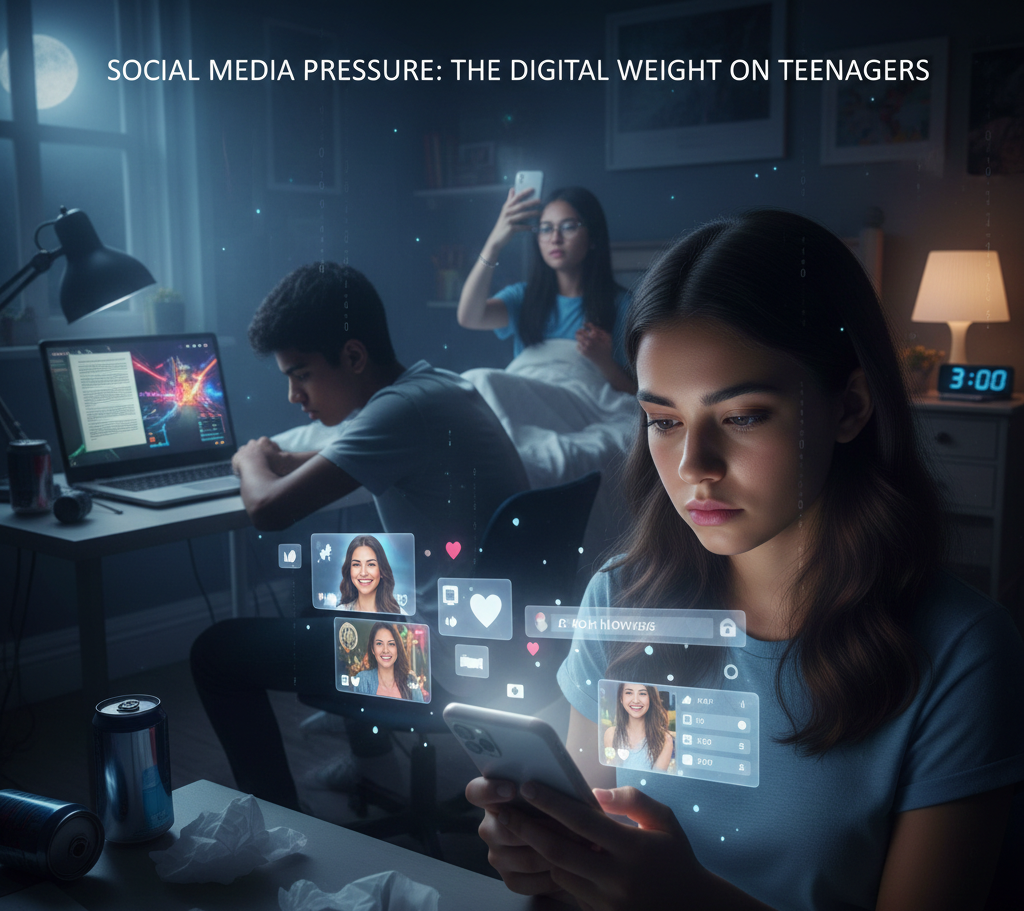
In 2026, social media is no longer just a “hobby” for teenagers; it is their primary social environment. While these platforms offer connection, they also exert a unique form of psychological pressure. This report explores how “the scroll” affects teenage self-esteem, sleep, and social anxiety, and offers friendly advice on navigating this digital landscape.
2. The Nature of the Pressure
The pressure teenagers feel today isn’t always from “cyberbullying”—it’s often more subtle and systemic.
-
The Highlight Reel vs. Reality: Teens are constantly comparing their “behind-the-scenes” lives (messy rooms, bad hair days) to everyone else’s polished, filtered “highlight reels.”
-
The Economy of “Likes”: Metrics like likes, views, and comments act as a digital scorecard for social worth. A post with low engagement can trigger feelings of rejection or invisibility.
-
FOMO (Fear Of Missing Out): Seeing friends hanging out in real-time via “Stories” can create a deep sense of exclusion, even if the teenager was simply busy with homework.
3. Key Impact Areas
| Area | The Impact |
| Self-Image | Constant exposure to AI-enhanced beauty standards can lead to body dysmorphia and lower self-confidence. |
| Sleep Quality | The “one last scroll” habit often steals 1–2 hours of vital restorative sleep, increasing irritability and anxiety the next day. |
| Concentration | Short-form video content (under 60 seconds) has conditioned many teen brains to struggle with long-form tasks like reading or studying. |
4. The “Always-On” Mental Toll
Unlike previous generations, today’s teenagers never “leave” school. Social drama follows them home into their bedrooms through their phones. This 24/7 connectivity means the brain never gets a chance to fully rest and reset from social evaluation.
Important Note: Recent 2025 data shows that teenagers who spend more than 3 hours a day on social media are twice as likely to experience symptoms of depression and anxiety.
5. Friendly Tips for Digital Balance
Helping teenagers manage this pressure isn’t about “banning” phones—it’s about building Digital Literacy.
-
Curate Your Feed: Encourage teens to unfollow accounts that make them feel bad about themselves and follow those that inspire or educate.
-
The “Sleep Sanctuary”: Keep phones out of the bedroom at least 30 minutes before sleep.
-
Reality Check: Remind them that most “viral” photos are heavily edited or staged.
-
Offline Connection: Prioritize “analog” hobbies—sports, art, or just walking—where there are no cameras or likes involved.
6. Conclusion
Social media is a powerful tool for creativity and friendship, but the pressure to be “perfect” and “available” is a heavy burden for a developing brain. By acknowledging these pressures rather than dismissing them, we can help teenagers use technology as a tool for growth rather than a source of stress.